BUILT FOR // ELECTRICIAN

Build trust around safety, licensing, and the next step.

Electrician website design should organize panel upgrades, troubleshooting, outlets, lighting, EV chargers, generators, licensing proof, safety language, and booking paths around the buyer's level of urgency.

Electrical buyers are making a safety decision. The Digital Home has to make licensing, service fit, urgency, and project confidence visible before the visitor asks for help.

DIGITAL HOME VISUAL SYSTEM

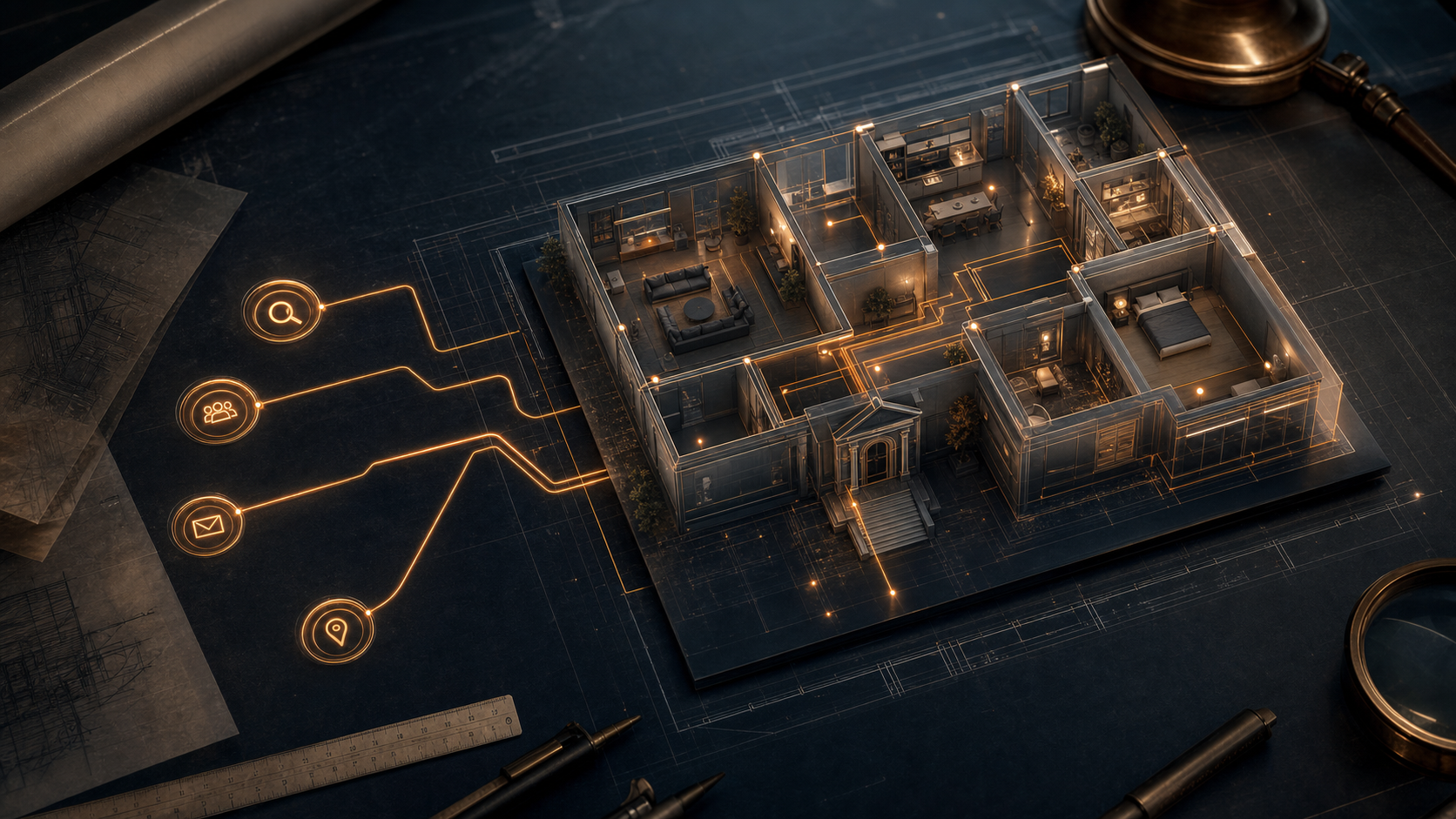
Show the Electrician buyer path as one connected Digital Home.

For electrician companies, the Digital Home becomes the front door, answer rooms, local signal layer, and follow-up path that keep buyer intent connected.

01 Map panel and repair pages as a visible room. This room gives an electrician buyer a specific place to understand the service, see proof, and choose the next step.

02 Map safety and licensing proof as a visible room. This room connects proof to the decision point so buyers can see why the company is credible before they call.

03 Map project service paths as a visible room. This room ties scope, visual proof, process, and fit together so project buyers can judge whether the company matches the work.

01 Map panel and repair pages as a visible room.
02 Map safety and licensing proof as a visible room.
03 Map project service paths as a visible room.

WHAT IT IS

An electrician Digital Home is a Smart Website Pro site structure built around the way electrician buyers decide. It gives service categories, proof, local context, FAQs, and conversion paths clear jobs so buyers can understand the business before they call.

THE BUYER MOMENT

A breaker keeps tripping, a panel needs an upgrade, an EV charger project is being planned, or the buyer needs a licensed professional they can trust.

A generic electrician website hides the difference between emergency troubleshooting, panel work, planned upgrades, permits, and small repairs.

WHO THIS IS BUILT FOR

Different buyers arrive with different levels of urgency.

These pages are written around the problem state, not a generic business category.

The safety-concerned homeowner

They need fast guidance around smells, sparks, flickers, tripped breakers, or outages.

The panel or upgrade buyer

They compare licensing, scope, timeline, permits, and proof before booking.

The EV charger or generator planner

They need project details and a clear way to start without guessing what information matters.

The commercial or property manager lead

They need service categories, credibility, and response expectations before sending the request.

DIGITAL HOME FIT

The website needs to carry the decision, not just describe the trade.

For electrician companies, the Digital Home becomes the front door, answer rooms, local signal layer, and follow-up path that keep buyer intent connected.

Electrical buyers need licensing, safety, and service clarity fast.

Panel, repair, EV charger, and project pages need different paths.

A vague website makes a serious safety decision feel risky.

01

Attract

Make the electrician front door specific.

The first screen and internal paths should quickly show what the business does, who it helps, and why the visitor is in the right place.
02

Convert

Turn the question into a useful next step.

Calls, forms, chat, booking, estimates, and the Digital Home Blueprint should match the visitor's intent instead of forcing every buyer into one generic contact page.
03

Retain

Keep context attached after the first action.

Follow-up paths should carry service need, timing, location, and buyer notes so the business can respond with less guesswork.

HOW THE PAGE GETS BUILT

How does the Electrician Digital Home get shaped?

The pass starts with buyer intent, then turns service questions, proof, scope and follow-up into a usable page system.

01

Map the buyer moments

Separate the main electrician service situations before writing pages or calls to action.

02

Assign service rooms

Give each priority service a clear place in the Digital Home instead of burying everything in one list.

03

Place proof beside doubt

Put reviews, project context, credentials, process answers, and local proof close to the claims they support.

04

Build the capture path

Connect calls, forms, chat, estimate paths, booking, and Digital Home Blueprint so the visitor can act from the page they are already reading.

05

Tie follow-up to context

Make sure the business receives the service type, timing, location, and buyer notes needed for a better first response.

THE ROOMS THIS CATEGORY NEEDS

What should the page make easy to find?

01

Panel and repair pages

This room gives an electrician buyer a specific place to understand the service, see proof, and choose the next step.

02

Safety and licensing proof

This room connects proof to the decision point so buyers can see why the company is credible before they call.

03

Project service paths

This room ties scope, visual proof, process, and fit together so project buyers can judge whether the company matches the work.

04

Inspection questions

This room gives repair and maintenance buyers a clear path from service need to appointment without making them diagnose the whole problem first.

05

Booking and call routes

This room confirms location fit, local proof, and service coverage so better-qualified buyers keep moving.

SIGNS YOU NEED THIS

How do you know the current page is weak?

  • Your electrician page reads like a generic service list.
  • Visitors have to hunt for proof, process, service areas, or next steps.
  • Your best explanations only happen after someone calls.
  • Reviews and project proof are not connected to the pages where buyers decide.
  • Forms do not capture service type, timing, location, or useful buyer context.
  • Google Business Profile, reviews, and website copy do not reinforce the same message.
  • Important service questions are answered by competitors or directories instead of your site.
  • Follow-up starts from a blank note instead of a clear buyer context.

WHAT DETERMINES SCOPE

Cost depends on what the Digital Home has to carry.

  • How many electrician service rooms need to be built or rewritten.
  • How much approved proof, FAQ, service-area, and process content already exists.
  • Whether chat, booking, estimate tools, forms, or follow-up routing are included.
  • How much internal-link and local-signal cleanup the current site needs.

SEARCH BEHAVIOR

What are buyers and answer systems looking for?

  • Electrical searches often mix urgent safety symptoms with planned upgrade research.
  • Panel, EV charger, generator, lighting, and repair pages need their own context.
  • License, insurance, review, and safety signals heavily influence the call.
  • A useful intake path should distinguish emergency outage from planned electrical work.

PROOF NEEDED

The page should carry the trust signals.

  • Approved electrician service list and priority service categories.
  • Review language, project proof, credentials, service-area facts, and process details.
  • Owner-approved claims about response expectations, warranties, guarantees, pricing direction, or availability.

QUESTIONS THIS PAGE SHOULD ANSWER

What should a serious Electrician buyer not have to call to ask?

What should an electrician website include?

An electrician website should include clear service paths, proof, process answers, FAQs, service-area context, reviews, and calls to action that fit the buyer's situation.

Why does electrician need industry-specific website copy?

Electrician buyers have different questions, urgency levels, proof needs, and service expectations than other trades. Generic copy misses those differences.

How does the Digital Home help buyers decide?

It organizes services, proof, local context, FAQs, and next steps so the buyer can understand the business without piecing the answer together from scattered pages.

How does Smart Website Pro build electrician service rooms?

Smart Website Pro starts with the buyer moments, then gives priority electrician service paths their own rooms with service clarity, proof, FAQs, local context, and a clear next step.

What proof should an electrician website show?

The page should show reviews, project or service proof, process details, credentials, service-area facts, and any approved claims that help the buyer trust the business before they call.

How does electrician website scope affect cost?

Scope depends on the number of service rooms, how much copy needs to be rewritten, how much proof is ready, and whether chat, booking, estimate paths, forms, or follow-up routing are included.

How do electrician pages help search and AI answers?

Clear service rooms, FAQPage schema, internal links, proof, and local language make it easier for search engines and AI answer systems to understand what the business does and who it helps.

Do electrician companies need separate pages for every service?

Not every service needs a full page. Priority services and high-intent questions should get dedicated rooms. Smaller services can be grouped when the buyer intent is similar.

Where does the Digital Home Blueprint fit?

The Digital Home Blueprint checks the current site first, then points to the rooms, proof, service paths, and lead capture gaps that need work.
DIGITAL HOME BLUEPRINT // READY

Find the gaps that are costing you better conversations.

The blueprint reviews your services, proof, buyer questions, lead paths and follow-up structure, then shows what should be fixed or built first.

Start Your Blueprint See what is working, what is missing, and what to fix first.
01 Digital Home
02 Welcome Lobby
03 Content Rooms
04 Automation Hallways
05 Conversion Path