BUILT FOR // PLUMBING DIGITAL HOMES

Give plumbing buyers the fast path they need now.

Plumbing website design organizes emergency service, drains, water heaters, repairs, license proof, service areas, and lead routing so urgent buyers know what to do next.

Plumbing buyers are often dealing with urgency: a burst pipe, backed-up drain, failed water heater, or fixture problem. The Digital Home gives them the service answer, trust proof, and route to act without slowing them down.

DIGITAL HOME VISUAL SYSTEM

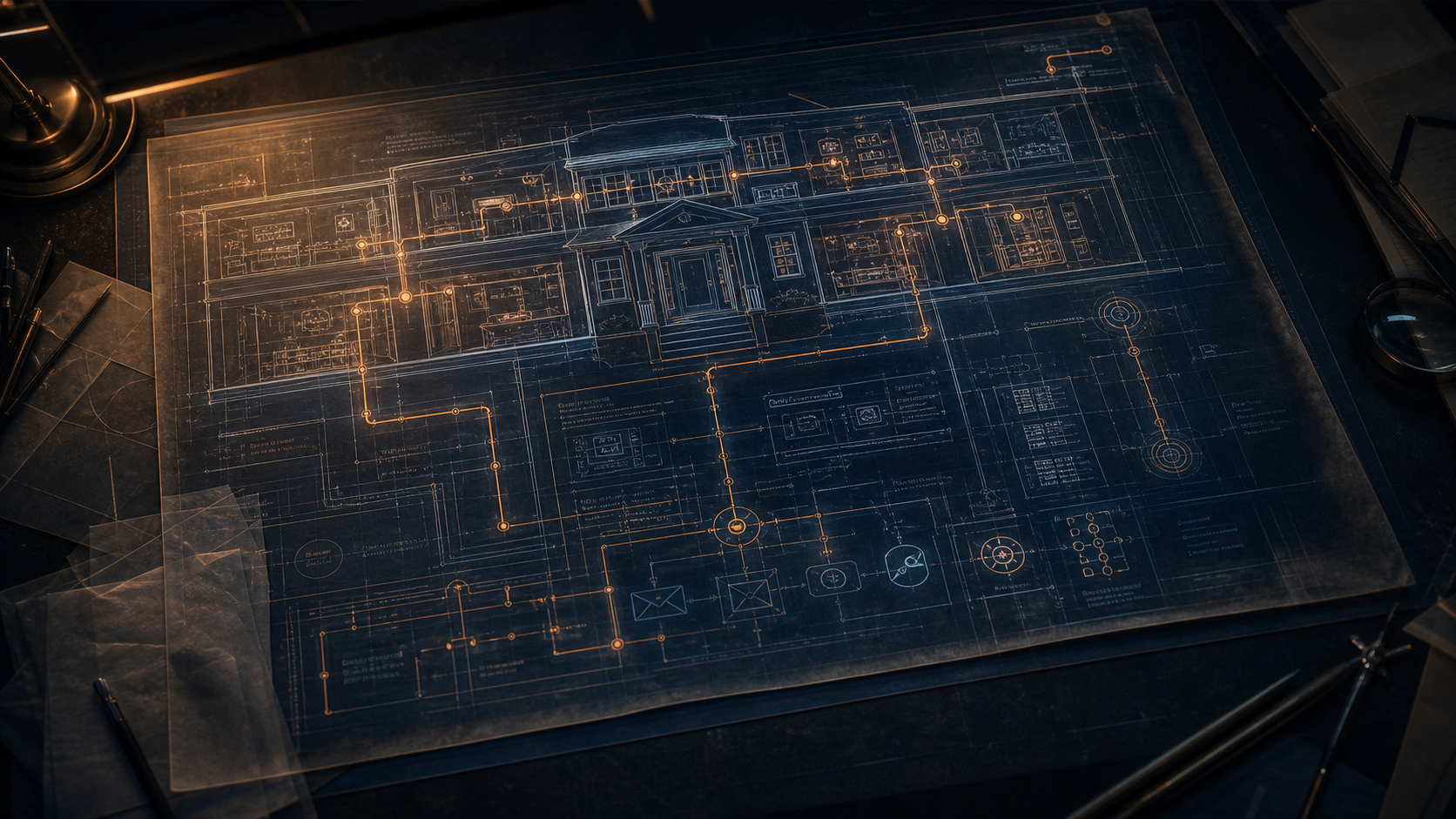
Show the Plumbing buyer path as one connected Digital Home.

For plumbing companies, the Digital Home becomes the urgent service front door, the answer room for common plumbing problems, and the hallway that routes each real inquiry to the right follow-up path.

01 Map emergency service entry as a visible room. Clear emergency plumbing paths for urgent visitors who need help quickly.

02 Map drain and water heater rooms as a visible room. Dedicated pages for the problems plumbing buyers search for most often.

03 Map license and review proof as a visible room. Trust signals placed close to the decision point.

01 Map emergency service entry as a visible room.
02 Map drain and water heater rooms as a visible room.
03 Map license and review proof as a visible room.

WHAT IT IS

A plumbing Digital Home is a Smart Website Pro site structure built around urgent and service-specific plumbing intent. It gives drains, leaks, water heaters, fixtures, emergency calls, service-area proof, and capture paths clear jobs. The result is a public website that helps buyers understand the plumber before they call and helps the business receive better context when they do.

THE BUYER MOMENT

The buyer is not reading for fun. They want to know if the plumber handles this problem, serves their area, looks trustworthy, and can be reached quickly.

A generic plumbing website treats emergency drain calls, water heater replacements, fixture projects, and maintenance questions like the same visit. That makes the buyer work too hard and lets faster competitors win the next action.

WHO THIS IS BUILT FOR

Different buyers arrive with different levels of urgency.

These pages are written around the problem state, not a generic business category.

The emergency caller

They have an active leak, backup or no-hot-water problem and want proof the company can respond.

The water-heater buyer

They need replacement context, timing, options and trust before they share job details.

The service-area checker

They are trying to confirm the plumber serves their neighborhood before they waste a call.

The buyer who will not call first

They need a form, chat, estimate path or booking route that captures the issue without forcing a phone call.

DIGITAL HOME FIT

The website needs to carry the decision, not just describe the trade.

For plumbing companies, the Digital Home becomes the urgent service front door, the answer room for common plumbing problems, and the hallway that routes each real inquiry to the right follow-up path.

Emergency plumbing traffic is easy to lose when calls, forms, and service pages are unclear.

Lead sellers and directories can intercept the buyer when the main website does not answer fast enough.

Drain, water heater, leak, fixture, and emergency services need different pages and next steps.

Slow or unclear follow-up can turn high-intent plumbing inquiries into competitor calls.

01

Attract

Answer the plumbing problem at the front door.

The site should quickly separate emergency service, drains, water heaters, fixtures, repairs, and project work so buyers can find their situation fast.
02

Convert

Make the next action obvious.

Calls, forms, chat, booking, and estimate paths should make it easy for the buyer to raise their hand with the service context already attached.
03

Retain

Keep the inquiry from leaking out.

Follow-up should route the request, notify the right people, and keep reminders moving when the buyer is serious but not ready this second.

HOW THE PAGE GETS BUILT

How does the Plumbing Digital Home get shaped?

The pass starts with buyer intent, then turns service questions, proof, scope and follow-up into a usable page system.

01

Separate urgent and planned plumbing intent

Map emergency service, drains, water heaters, fixtures, repairs and projects before writing the page structure.

02

Build service-specific answer rooms

Give common plumbing problems their own clear explanations, proof points and next steps.

03

Add trust near action

Place license language, review context, service-area confidence and emergency rules close to the call or form.

04

Capture the problem clearly

Ask for service need, urgency, location, contact details and preferred route without turning the form into a chore.

05

Route follow-up while intent is hot

Send the inquiry with enough context for the business to respond without starting from a blank note.

THE ROOMS THIS CATEGORY NEEDS

What should the page make easy to find?

01

Emergency Service Entry

Clear emergency plumbing paths for urgent visitors who need help quickly.

02

Drain and Water Heater Rooms

Dedicated pages for the problems plumbing buyers search for most often.

03

License and Review Proof

Trust signals placed close to the decision point.

04

Service-Area Confidence

Clear coverage language and local proof so buyers know they are in the right place.

05

Capture and Routing Hallways

Paths that capture the problem, contact details, timing, and preferred next step.

SIGNS YOU NEED THIS

How do you know the current page is weak?

  • Emergency plumbing visitors have to hunt for the right next step.
  • Drain, water heater, leak and fixture pages all say the same thing.
  • Your website does not make license, review or service-area proof obvious.
  • Forms arrive with only a name and phone number.
  • Buyers leave because they cannot tell if you handle their exact issue.
  • Your follow-up depends on someone manually sorting every inquiry.
  • Directories answer plumbing questions better than your own website.
  • The contact page does not match the urgency of the visit.

WHAT DETERMINES SCOPE

Cost depends on what the Digital Home has to carry.

  • How many plumbing services need their own page or section.
  • Whether emergency, booking, chat, estimate or field-service handoff paths are included.
  • How much license, review, warranty and service-area proof already exists.
  • How much follow-up logic is needed after the first inquiry.

SEARCH BEHAVIOR

What are buyers and answer systems looking for?

  • Emergency plumbing searches are fast, local, and usually mobile.
  • Drain cleaning and water heater searches need service-specific trust and timing context.
  • Buyers look for proof, service-area confidence, licensing language, reviews, and clear contact paths.
  • Recurring maintenance and larger plumbing projects need a different path than active emergencies.

PROOF NEEDED

The page should carry the trust signals.

  • Approved service list and priority plumbing categories.
  • License language, service-area boundaries, review proof, emergency policy, and booking availability.
  • Owner-approved claims about response expectations, warranties, financing, and after-hours handling.

QUESTIONS THIS PAGE SHOULD ANSWER

What should a serious Plumbing buyer not have to call to ask?

What should a plumbing website include?

A plumbing website should include emergency service paths, drain and water heater pages, fixture and repair pages, licensing and review proof, service-area clarity, FAQs, and clear call, form, chat, booking, or estimate paths.

Why do plumbing websites need separate service pages?

A buyer with a burst pipe is not in the same mindset as someone pricing a water heater or planning fixture work. Separate pages help buyers and search systems understand the service more clearly.

How does a Digital Home help plumbing companies attract better buyers?

It organizes the plumbing services, proof, service-area language, reviews, and FAQs into a structure buyers can understand quickly.

How does the site convert urgent plumbing visitors?

It gives the visitor a clear next step and captures enough context for the business to respond intelligently: service type, timing, location, contact details, and the preferred route.

Can Instant Estimate Tools work for plumbing?

Yes, when the goal is useful direction instead of a final quote. The tool can help collect service and scope context while protecting the private pricing model.

What makes plumbing follow-up different?

Plumbing often has urgency. The follow-up path should get the right request to the right person quickly and keep the conversation moving if the buyer does not act immediately.

Should a plumbing site rely only on a phone number?

No. Phone calls matter, but forms, chat, booking paths, and estimate paths can capture serious buyers who need another way to start.

Is this built for local plumbing companies?

Yes. The structure is especially useful for home service companies that need service clarity, local trust, and a better way to handle high-intent inquiries.

DIGITAL HOME BLUEPRINT // READY

Find the gaps that are costing you better conversations.

The blueprint reviews your services, proof, buyer questions, lead paths and follow-up structure, then shows what should be fixed or built first.

Start Your Blueprint See what is working, what is missing, and what to fix first.
01 Digital Home
02 Welcome Lobby
03 Content Rooms
04 Automation Hallways
05 Conversion Path