The After-Hours Leak
A homeowner calls at 9:30 PM about a burst pipe. No one answers. They call the next plumber on the list. The job is gone by morning.
AUTOMATION HALLWAYS // VOICE AGENT
A voice agent for home service businesses answers every inbound call in under 2 seconds, qualifies the lead, books the appointment, and logs the conversation. It runs 24 hours a day without breaks, voicemail, or missed opportunities.
WHAT IT IS
A voice agent for your Digital Home is a dedicated AI phone line that answers every inbound call on behalf of the business. It is trained on what you do, where you work, and how you want calls handled. It greets callers naturally, asks the right questions, books appointments directly into the calendar, and transfers to a human when the situation calls for it. Every call is logged, transcribed, and tracked. Missed calls trigger an automatic text back. Nothing goes unaccounted for.
WHO THIS IS FOR
A homeowner calls at 9:30 PM about a burst pipe. No one answers. They call the next plumber on the list. The job is gone by morning.
HVAC season hits and the phone rings constantly. The tech can't answer on the job site. The office is overwhelmed. Good leads fall through the gaps.
Callers hear a voicemail. Most hang up. The ones who leave a message are cold by the time the callback happens two hours later.
Buyers call between noon and 1 PM when staff is out. The call goes unanswered. A competitor who picks up gets the job.
HOW IT WORKS
Any inbound call to the business reaches the voice agent in under 2 seconds. No rings going unanswered. No holds. A real local number picks up immediately.
The agent knows the business: services offered, service areas, current availability, and how to handle common call types. It asks the right questions and routes accordingly.
For qualified callers, the agent books directly into the calendar. No back-and-forth. No follow-up required. The slot is confirmed before the call ends.
When a situation needs a person, the agent transfers the call and passes along everything it collected: the caller's name, problem, location, and what was discussed.
Every call produces a full transcript and log entry. Missed-call text backs fire automatically when calls can't be answered. Nothing falls through without a record.
WORKS WITH YOUR DISPATCH SOFTWARE
Your dispatcher does not change how they work. When a voice agent books a job or qualifies a caller, the appointment details push directly to the field service software your team already uses. ServiceTitan, HouseCall Pro, Jobber, and other platforms connect to the same system that handles every other conversion path in the Digital Home. The job lands in your board the same way every other job does. Nothing about your dispatch workflow changes.
SIGNS YOU NEED IT
You found out a customer called and went with someone else, and you never even knew they tried.
Your phone rings during a job and you let it go to voicemail. It happens more than you want to admit.
A prospective customer called after hours and left no message. You have no idea how many others did the same.
Your busy season costs you jobs because you physically cannot answer every call.
You follow up with voicemails and half the people have already booked someone else.
You pay someone to answer phones but they can't cover nights, weekends, or holidays.
A customer called four times before they reached you. They mentioned it when you finally spoke.
You're losing jobs you never find out about because the call never got answered.
DIGITAL HOME ROLE
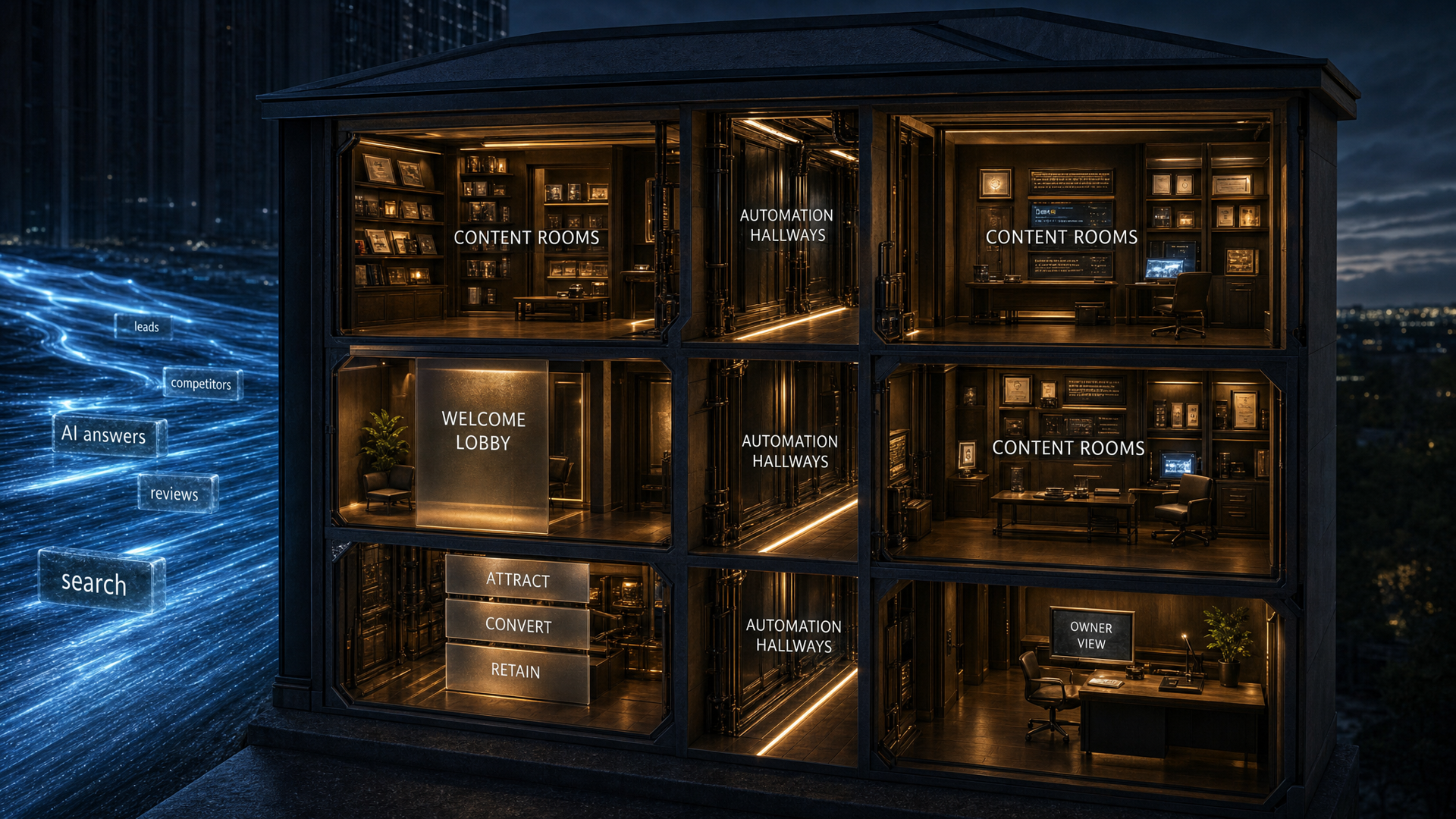
The Digital Home attracts buyers through the website, search, content, and visibility systems. The Automation Hallways are what happen after a buyer takes action. The voice agent sits at the front of those hallways. When someone calls, it is the first point of contact. It qualifies, routes, books, and logs. Then the rest of the automation structure takes over.
WHAT IS INCLUDED
SCOPE // WHAT SHAPES THE BUILD
Voice agent scope depends on call volume, booking rules, transfer paths, software connections and how much business knowledge needs to be trained. The Digital Home Blueprint shows which capture gaps should be fixed first.
Start Your BlueprintA business missing a few calls after hours needs a different setup than a company with heavy peak-season volume across multiple locations.
The agent needs clear rules for emergency calls, normal appointments, service areas, business hours and when to transfer to a person.
Calendar booking, dispatch software, lead routing, call summaries and notifications all shape the build.
Services, pricing context, FAQs, policies and edge-case handling determine how much training is needed before the agent goes live.
FREQUENTLY ASKED QUESTIONS
A voice agent is an AI-powered phone line that answers inbound calls on behalf of the business. It greets callers, asks qualifying questions, books appointments directly into the calendar, and transfers to a human when needed. It is trained on the specific business: the services offered, the service area, pricing ranges, and call handling preferences. Every call is answered in under 2 seconds and every conversation is logged.
The agent communicates naturally and handles the most common call types without confusion. That said, most businesses set up the agent to be transparent when asked. The goal is not to deceive callers. The goal is to answer quickly, qualify the lead, and route it correctly. A caller who gets their question answered and their appointment booked in under three minutes is rarely focused on whether a human or an agent helped them.
The setup process involves gathering the information the agent needs: what services the business offers, which zip codes or towns it serves, how calls should be handled, what questions callers typically ask, and how to route edge cases. That information gets built into the agent before it goes live. The agent does not guess. It works from what it has been given.
The agent can book appointments directly into the calendar during the call. No message-taking required. The caller confirms their slot before the call ends. This is different from a system that captures contact info and asks someone to call back. The appointment is secured in real time.
The agent transfers the call to the appropriate person or team. Before the transfer, it passes along everything it collected: the caller's name, what they need, their location, and what was already discussed. The person picking up is not starting from zero. They have context.
If the transfer cannot connect, the agent handles the call and logs the details. A missed-call text back fires automatically so the business can follow up fast. The caller also gets confirmation that someone will reach out. The lead does not disappear.
No. The agent operates on a dedicated local phone number with real caller ID. It looks and acts like a local business number. Callers in the service area see a familiar area code, not a generic 800 number.
No. The agent covers every inbound call, at any hour. This includes lunch breaks, peak-season rushes, times when staff is on the job site, weekends, and holidays. Many businesses lose calls during normal business hours simply because the team is busy or unavailable. The agent removes that gap entirely.
The voice agent lives in the Automation Hallways layer of the Digital Home. The Digital Home attracts buyers through the website, search, and content. The Automation Hallways handle what happens after a buyer takes action. When someone calls, the voice agent is the first point of contact. It qualifies, books, transfers, and logs. Every call connects back to the broader capture and follow-up structure.
A person can only handle one call at a time, works limited hours, takes breaks, and has good days and bad days. A voice agent handles every call simultaneously, 24 hours a day, 365 days a year, with consistent quality. It does not get overwhelmed during a busy season. It does not miss a call because it stepped away. And every conversation is logged without manual note-taking. For many home service businesses, the agent handles the majority of inbound calls without any human involvement.
NEXT ROOMS // KEEP MOVING
DIGITAL HOME BLUEPRINT // READY
The blueprint reviews your services, proof, buyer questions, lead paths and follow-up structure, then shows what should be fixed or built first.